
A term that keeps surfacing in my resilience research is “stress.”
Here’s the catch—most folks use the terms “stress” and “overwhelm” interchangeably to describe pressure, but research says they’re not the same.
I love behavioral scientist/research rockstar Brené Brown’s descriptions, which she defines in depth in her brilliant book, Atlas of the Heart: “For me, stress is barely managing the Whac-A-Mole game at the carnival, and overwhelm is leaving the carnival in tears. And not being able to find my car.”
Interestingly, neuroscience pioneer Dr. Amy Arnsten (Yale School of Medicine) has an explanation for Brené’s lost car…
Amy’s work says that our brains physically respond to situations differently depending on whether we feel in control:
💪Pressure from situations we believe are within our control can help us by sharpening our focus, boosting our engagement and driving our productivity. (It might not feel comfortable, but it serves a purpose.)
🔥Pressure from situations we believe are beyond our control can lead to a state of overwhelm. When this pressure is intense or becomes chronic, our brains can go “offline,” affecting our responses and health, and ultimately our relationships and careers. (…And our ability to remember where we parked!)
Psychologist Dr. Alok Kanojia summed this up in a Mel Robbins podcast clip: “You don’t feel overwhelmed from dealing with too much; You get overwhelmed when many of the things you’re dealing with are out of your control.”
🤔So, how do we know where we stand, especially in a world where things feel significantly beyond our control?
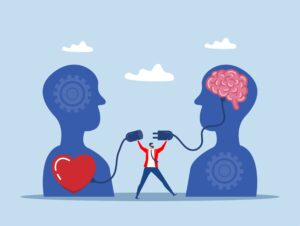
Both your gut and your brain can offer clues.
Because of the vagus nerve, which connects our brain to our digestive organs:
🦋Stress can sometimes manifest as excitement “butterflies” in our gut. It can help us finish a project, stay alert, and think creatively. Usually, when the stressful period is over, your gut quiets down.
💣Overwhelm can feel heavier (think extremes like dread, fear, exhaustion, paralysis, or emptiness). In our guts, overwhelm can show up as nausea…or sometimes no appetite at all, and it can linger. Overwhelm is our brain in overdrive…and when our bodies experience chronic overwhelm, we can slide into burnout.
Now, before everyone comes for me: Not all gut issues are pressure-related, some guts overreact, and not all folks have clever guts that send us clear emotional signals.
But…sometimes physical cues show up before (or more dramatically) than our mental warning lights…so stopping to tune into our guts can give us another data point.
💡Why this matters: Resilience involves emotional regulation, so how we manage pressure (stress or overwhelm) is important. Also, stress management can look different than burnout recovery.
Listening carefully to what both your gut and brain may be telling you, is a first step in finding the right solutions for you– whether you’re under stress or in a state of overwhelm.
Disclaimer: I am not a licensed therapist or resilience expert…I’m a voracious reader, leader, coach, and communications pro who is intensely curious about resilience and burnout and how it’s playing out in our workplaces and lives today. If you’re struggling with your mental health, please seek out a qualified professional.