
I’ve been connecting some dots around resilience lately, and had a wild “aha” moment this week that I’m excited to share—but first you’ll need some context…
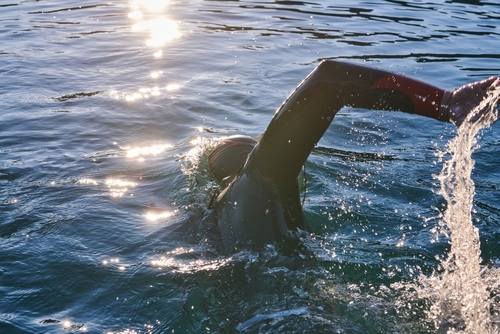
🏊 All my life, I’ve been a swimmer.
I spent almost every elementary, middle and high school summer morning at my town’s public pool, and in college I worked as a lifeguard and swim instructor. As an adult, I’ve trained for a handful of sprint triathlons, focusing mostly on the swim leg of the race.
To be clear, I’m neither fast nor competitive. (I regularly came in last in my childhood swim meets, and sadly, my speed hasn’t significantly improved in adulthood!) Despite not loving meets or races, though, l’ve always found a sense of joy and calm in challenging swim workouts and in improving my technique.
Looking back, I’ve been at my physical, mental and emotional best when I had access to a lap pool: focused, strong, and positive. (Not surprising, I earned my best undergrad grades the semester I swam with our college swimmers.)
I’ve taken breaks, but I’ve been back in the pool in recent months, and feel a difference. My most challenging workouts rarely feel daunting (the way running, biking, or strength training does to me), and I always leave the pool feeling better by magnitudes. I also sleep more soundly on swim days, and always attributed these benefits to physical exertion and endorphins.
One thing that never crossed my mind (until this week) was how I breathe while I swim.
As part of my resilience research, I came across the concept of breathwork for emotional regulation. Specifically, something called the Polyvagal Theory, developed by Dr. Stephen Porges. Porges proposes that intentionally activating the body’s vagus nerve (the superhighway between our brain and key organs) can dampen the fight/flight response, reduce anxiety and improve overall well-being.
He, and subsequent theorists suggest we can do this through intentional breathwork.
Polyvagal breathwork involves controlled, slow, deep, breaths with extended exhales.
🤔Hmmm…Kindof like what I naturally do while swimming laps.
So, what if, in addition to building muscles and creating endorphins, all this time, I’ve been unconsciously regulating my nervous system in the pool through polyvagal breathwork? 🤯
💡Why this matters: If you or someone you know is looking to boost your resilience but are unsure where to begin, perhaps start by taking a breath. For a few minutes every day, consider breathing in a slow, rhythmic pattern, and notice if you feel a difference on those days.
If you want to get more sophisticated, perhaps explore structured polyvagal breathwork approaches like the box breath or the physiological sigh. Or consider lap swimming, yoga, or other exercises that have a rhythmic breathing/big exhale component.
***
While I’m no resilience expert (yet!), I’m committed to showing up and sharing what I’m learning from the experts to help – whether you’re working on your own resilience, or you’re being asked to help your loved ones, your teams or your organizations get better and faster at bouncing back, adapting, and growing. So stay tuned for more…
Disclaimer: I am not a licensed therapist or resilience expert…just a voracious reader, leader, certified coach, and communications pro who is intensely curious about resilience and burnout and how it’s playing out in our workplaces and lives today. If you’re struggling with your mental health, please seek out a qualified professional. ❤️